
ACRESAL IMPACT STORY – METANI COMMUNITY
From Harvest Crisis to Economic Opportunity: How Metani Community Built a Market That Now Serves Over 100,000 People
In the remote farming community of Metani in Toungo Local Government Area of Adamawa State, access to markets had long been a major challenge for farmers and traders. Metani alone has a population of over 20,000 people, while Toungo Local Government Area has a population of over 100,000 residents spread across vast rural settlements. Despite the area’s strong agricultural potential, the entire local government largely depended on a single major market — the Toungo Market.
For years, farmers from Metani and surrounding communities struggled after harvest seasons. Transporting produce over long distances was expensive, stressful, and often unprofitable. Many were forced to sell their farm produce at low prices due to limited access to buyers and poor market opportunities.
That narrative began to change through the intervention of the ACReSAL project and its Community Revolving Fund (CRF) Programme in Adamawa State.
The programme, which is supported by the World Bank and co-funded by the Adamawa State Government under the leadership of Governor Ahmadu Umaru Fintiri, aligns with the administration’s broader vision of reducing poverty, strengthening livelihoods, and building resilient communities across the state.
Through strategic investments in agriculture, community development, and climate resilience initiatives, the Fintiri administration continues to create opportunities that empower rural populations, improve food security, and stimulate local economies.
Under the CRF initiative, a total of $525,000 was disbursed to 21 pilot communities across the state. The programme supported 115 Community Interest Groups (CIGs), benefiting 2,218 individuals with grants of $25,000 each.
Metani emerged as one of the pilot communities.
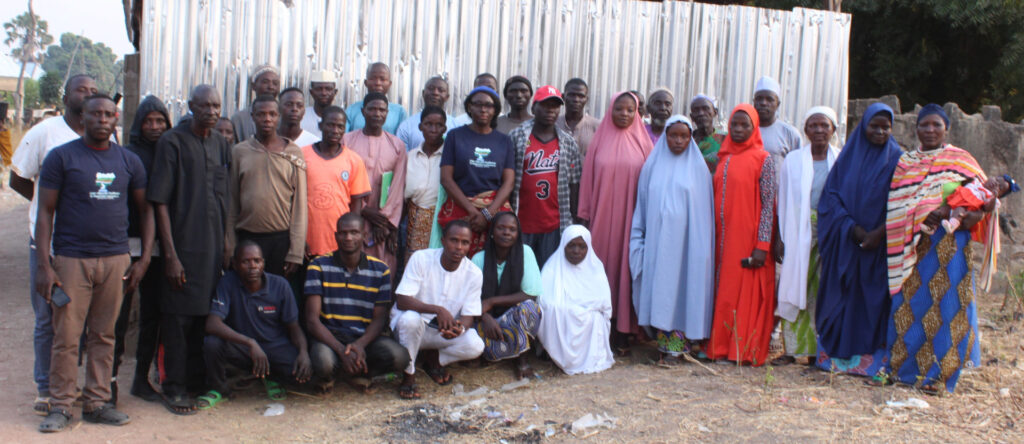
The community received support through three Community Interest Groups comprising 60 beneficiaries, with women making up over 40 percent of participants. The groups focused largely on farming activities, and the intervention arrived at a critical time.
With funds disbursed in June 2025, farmers were able to expand their farmlands, hire additional labor, and purchase improved farming inputs. The result was a significantly better harvest season compared to previous years.
But success was met with an unexpected challenge.
Around the same period, food produce prices crashed across Nigeria despite the continued high cost of farming inputs and agricultural production. Although farmers in Metani recorded impressive harvests, many struggled to make profitable sales due to poor market access and declining produce prices nationwide. The situation threatened to reduce the gains achieved through the farming season.
Rather than allowing the challenge to overwhelm them, the beneficiaries responded with innovation and collective action.
Community members came together and proposed the establishment of a local market in Metani. They approached their village head with the idea, and the proposal received immediate approval. While a permanent site is still being considered, a temporary location was allocated to kickstart operations.
Today, that decision is transforming lives.
The newly established Metani Market now serves no fewer than 15 communities with a combined population estimated at over 100,000 people. What started as a response to a marketing crisis has rapidly evolved into a growing economic hub for the region.
The impact has been far-reaching.
Farmers now have easier access to buyers and can sell their produce without the burden of costly travel to distant markets. This has reduced transportation expenses, minimized post-harvest losses, and improved household incomes.
The market has also created employment opportunities for young people. During market days, youths are actively engaged in transportation, loading and offloading goods, petty trading, food vending, and other commercial activities that support the growing local economy.
Beyond agricultural produce, traders from neighboring communities now bring in goods and services that were previously difficult to access locally. Residents can purchase household items, clothing, tools, and other essential commodities without traveling long distances.
More importantly, the market has strengthened social and economic ties among surrounding communities, fostering cooperation, trade, and local development.
The story of Metani demonstrates how community-driven solutions, when supported by strategic interventions like the ACReSAL CRF Programme and the Adamawa State Government’s commitment to livelihood development, can create sustainable impact beyond the original scope of a project.
What began as agricultural support has now sparked rural economic transformation.
As ACReSAL continues implementing resilience and livelihood initiatives across Adamawa State, stories like Metani stand as evidence that empowering communities with resources, trust, and institutional support can unlock innovations capable of transforming entire regions.
This is one of many impact stories emerging from communities across the state — stories of resilience, collaboration, and sustainable development driven by the people themselves.
For Metani, the harvest did more than produce food.
It produced opportunity.
And a market that may shape the economic future of an entire region.